Battery pack design, simulation & engineering

From a fuzzy pack request to a buildable, costed and certifiable specification.

Scope

01

Feasibility & concept

Cell selection and architecture trade-offs, packaging envelope, voltage and energy targets, cost model.

You get: a target spec your suppliers can quote against.
02

Certification pathway

Applicable regulations, test plan, lab options, timeline and budget — UN R100 / R10 / UN 38.3 / IEC 62619 / EU 2023/1542.

You get: a dated, costed route to market.
03

Thermal & duty-cycle assessment

Cooling concept, duty-cycle loads, lifetime and SOH estimate, margin where it actually matters.

You get: a thermal concept with stated margin — not a single number.
04

Integration

BMS-to-vehicle interface, CAN / DBC definition, fault tree and commissioning plan.

You get: interface documents a supplier can actually build to.
05

Performance modelling & validation

ECM parameter identification and SOC / SOH estimation, validated on an independent duty cycle.

You get: a model and parameter set with its validity range written down.

Selected work

All cases →
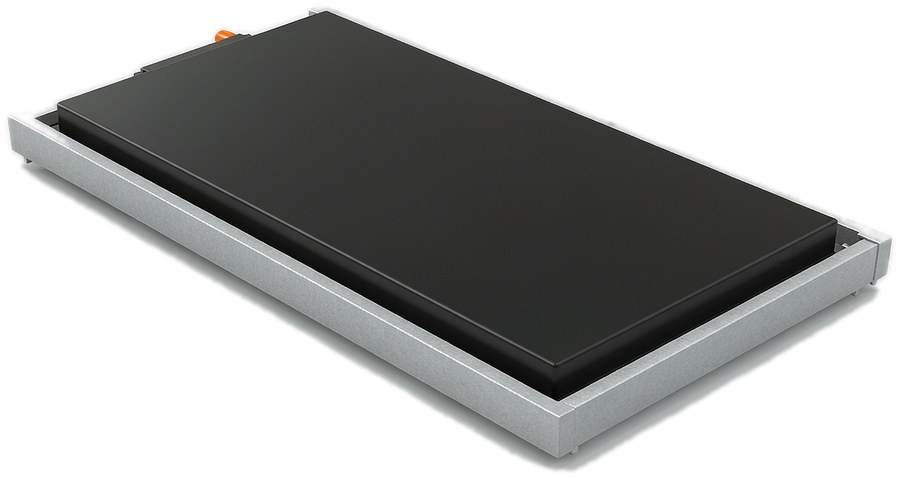
Illustrative render of an electric-vehicle traction battery pack: a flat sealed cover in a slim aluminium frame, with the high-voltage connector at one end.
Battery Pack

Feasibility & concept

  • Cell selection — chemistry, format and suppliers screened against duty cycle and cost.
  • Architecture trade-offs — series / parallel layout, module strategy and integration options compared.
  • Packaging envelope — volume, mass and crash envelope checked against the host vehicle.
  • Voltage and energy targets — usable energy, peak power and SOC window defined and traced.
  • Cost model — bill-of-material and process cost drivers, with the sensitivity that matters.

Illustrative pack architecture — generated render, not a client pack.
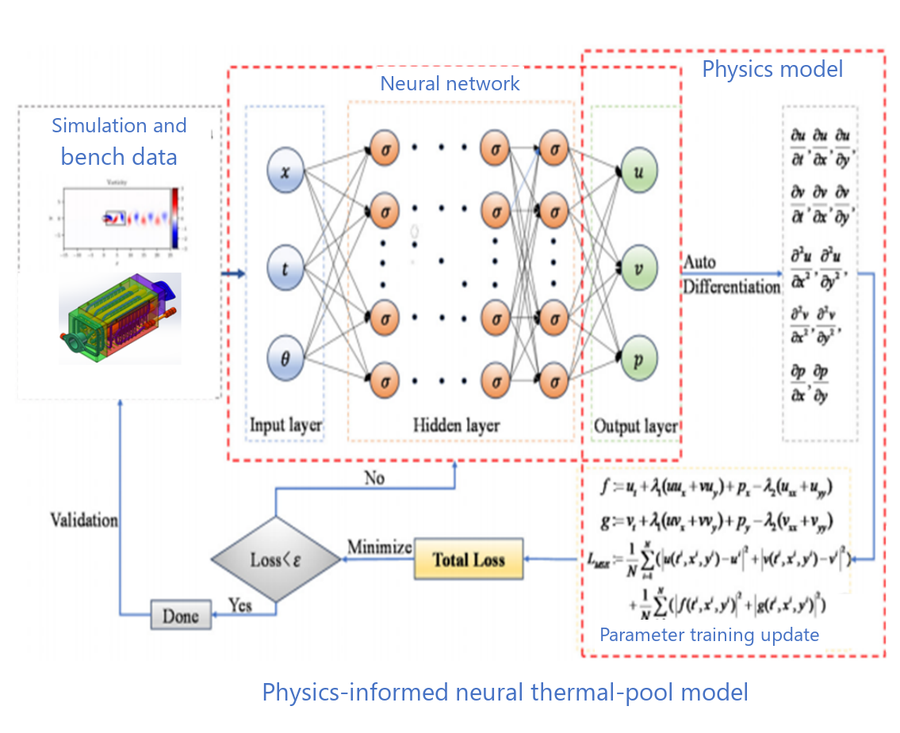
Diagram of a physics-informed neural thermal-pool model: simulation and bench data feeding a neural network, constrained by a physics model during training.
Battery Pack

Battery performance modelling & validation

  • ECM parameter identification from test data, validated across temperature.
  • SOC and SOH estimation checked on an independent duty cycle, with the validity boundary stated explicitly.
  • Physics-informed neural surrogate trained on simulation and bench data — simulation-grade results at a fraction of the run time.

Physics-informed neural thermal-pool model.

Tell us what the vehicle needs

Send the requirement, the constraints and the deadline. You get an honest read on what it takes.

[email protected]