Selected work
All cases →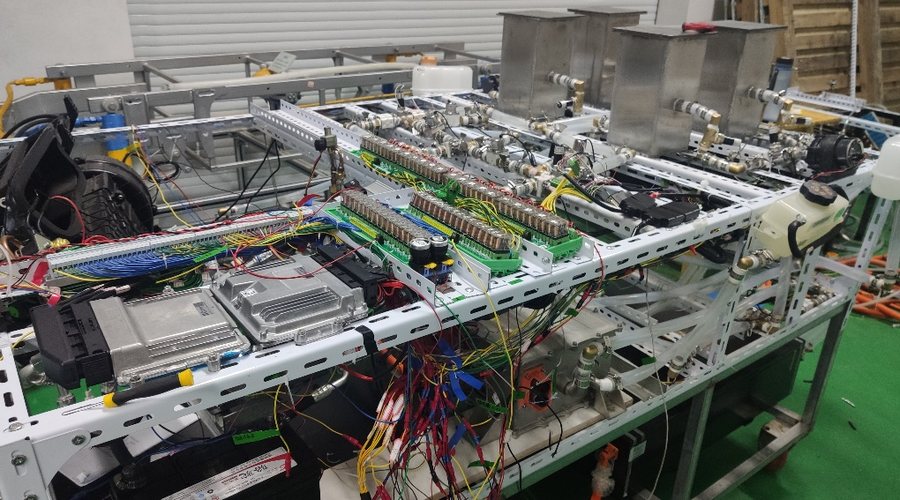
EV Thermal
Modelling & validation platform
- 1D system and 3D flow/thermal models calibrated against measured data — component calibration, system coupling and multi-condition test correlation.
- Rapid prototyping and hardware-in-the-loop for real-time control-strategy evaluation — dSPACE / MicroAutoBox / HIL.
- Component test benches, vehicle duty cycles and reliability testing.
Bench and real-time rig, built and instrumented in-house.
EV Thermal
Thermal & energy management control
- System and battery-state models fused to co-ordinate propulsion power with thermal actuators.
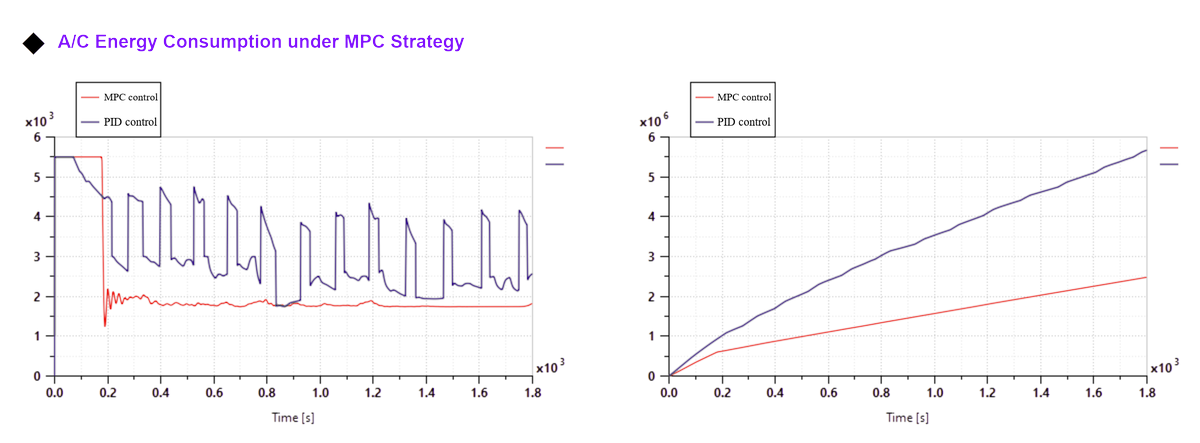
- MPC and ECMS strategies benchmarked against a baseline controller in co-simulation.
- Layered evaluation: model simulation, HIL and vehicle test, with performance and real-time capability judged separately.
Air-conditioning energy draw, MPC versus PID, over an environmental cycle.
EV Thermal
Hybrid-vehicle thermal management co-development
- System model built and calibrated against bench and vehicle measurements.
- Component concept matched to the thermal duty cycle — compressors, valves, coolant loops and heat exchangers.
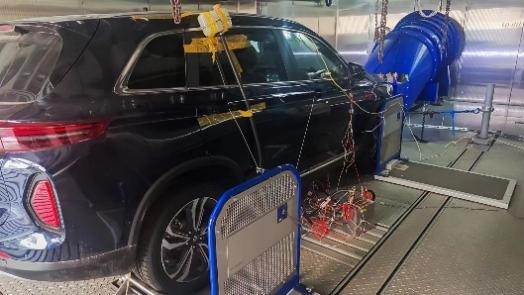
- Coordinated control strategy across power split and thermal flow, assessed on a vehicle-level environmental cycle.
Vehicle-level environmental cycle, run in the climatic test cell.