Cases

Five pieces of work. Each one started as a requirement nobody could price.

EV thermal & energy management
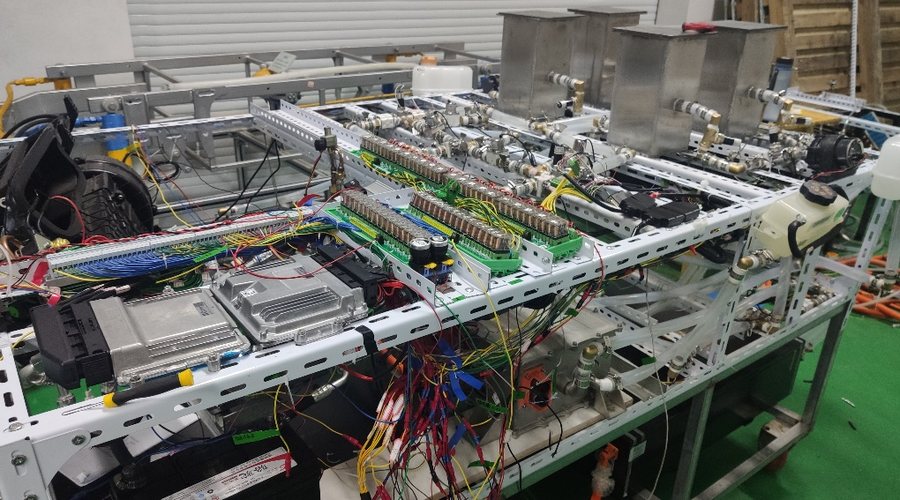
Bench photograph of a hardware-in-the-loop test rig: an aluminium frame carrying power electronics, current sensors, coolant lines and dense wiring harnesses.
EV Thermal

Modelling & validation platform

  • 1D system and 3D flow/thermal models calibrated against measured data — component calibration, system coupling and multi-condition test correlation.
  • Rapid prototyping and hardware-in-the-loop for real-time control-strategy evaluation — dSPACE / MicroAutoBox / HIL.
  • Component test benches, vehicle duty cycles and reliability testing.

Bench and real-time rig, built and instrumented in-house.
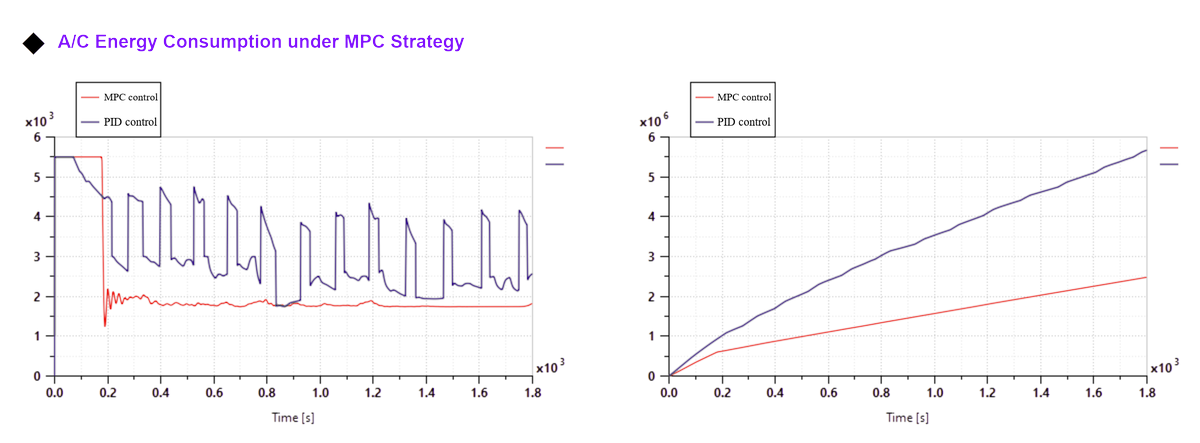
Two plots of air-conditioning energy consumption over time, comparing an MPC controller against a PID controller.
EV Thermal

Thermal & energy management control

  • System and battery-state models fused to co-ordinate propulsion power with thermal actuators.
  • MPC and ECMS strategies benchmarked against a baseline controller in co-simulation.
  • Layered evaluation: model simulation, HIL and vehicle test, with performance and real-time capability judged separately.

Air-conditioning energy draw, MPC versus PID, over an environmental cycle.
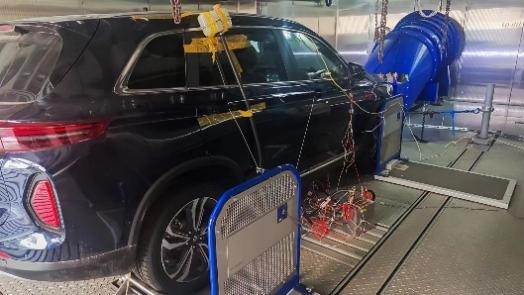
Photograph of an instrumented vehicle on a chassis dynamometer inside a climatic test cell.
EV Thermal

Hybrid-vehicle thermal management co-development

  • System model built and calibrated against bench and vehicle measurements.
  • Component concept matched to the thermal duty cycle — compressors, valves, coolant loops and heat exchangers.
  • Coordinated control strategy across power split and thermal flow, assessed on a vehicle-level environmental cycle.

Vehicle-level environmental cycle, run in the climatic test cell.
Battery pack design, simulation & engineering

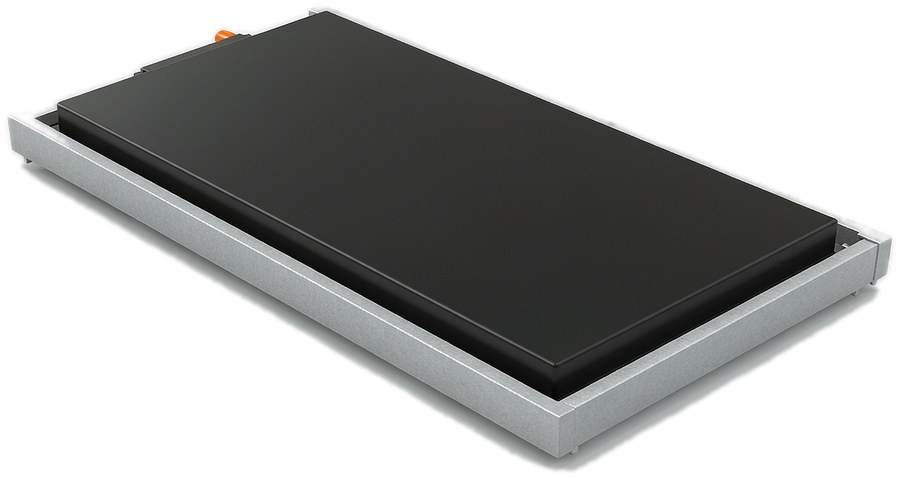
Illustrative render of an electric-vehicle traction battery pack: a flat sealed cover in a slim aluminium frame, with the high-voltage connector at one end.
Battery Pack

Feasibility & concept

  • Cell selection — chemistry, format and suppliers screened against duty cycle and cost.
  • Architecture trade-offs — series / parallel layout, module strategy and integration options compared.
  • Packaging envelope — volume, mass and crash envelope checked against the host vehicle.
  • Voltage and energy targets — usable energy, peak power and SOC window defined and traced.
  • Cost model — bill-of-material and process cost drivers, with the sensitivity that matters.

Illustrative pack architecture — generated render, not a client pack.

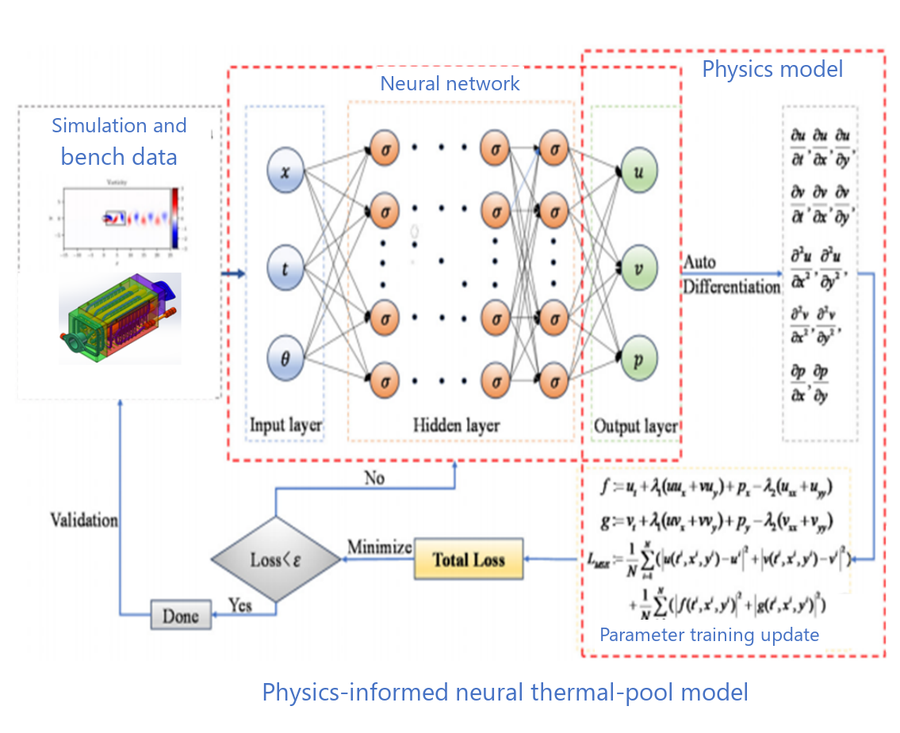
Diagram of a physics-informed neural thermal-pool model: simulation and bench data feeding a neural network, constrained by a physics model during training.
Battery Pack

Battery performance modelling & validation

  • ECM parameter identification from test data, validated across temperature.
  • SOC and SOH estimation checked on an independent duty cycle, with the validity boundary stated explicitly.
  • Physics-informed neural surrogate trained on simulation and bench data — simulation-grade results at a fraction of the run time.

Physics-informed neural thermal-pool model.

Tell us what the vehicle needs

Send the requirement, the constraints and the deadline. You get an honest read on what it takes.

[email protected]